

▲ ☰

Some Points for the Iranian Leadership`s Consideration
During the United Nations General Assembly session in New York, reports of meetings between Pakistan's Prime Minister Mian Shehbaz Sharif and other members of his team with Iranian President Masoud Pezeshkian and other leaders are being discussed in the international environment, which holds great significance in the current situation in the Middle East and could have far-reaching consequences.
The Middle East at present is not witnessing a four-sided war but, in the context of apparently and behind-the-scenes active forces and lobbies, it can also be interpreted as an eight-sided global conflict that appears to be a precursor to a new world war. The interests of global powers—America, Europe, Russia, and China—in the Middle East are well established, while regionally too, four parties are visible in this war:
  1. Israel, which has been struggling for a Greater Israel for the past eighty years, and its current exertions appear to be leading it toward a final round in which it is not letting any opportunity go to waste.
  2. Iran, which since its religious revolution (1979) has been continuously engaged in advancing expansionist ambitions in the region on a Sunni-Shia basis, and the progress it has made in this regard so far cannot be termed slow by any means.
  3. Arab countries, despite themselves being the battlefield, are not only devoid of mutual unity and reconciliation but also show no common agenda, preparation for it, or any level of activity.
  4. Turkey is also not outside this conflict, while its recent tensions with Israel are giving some indication of future conditions.
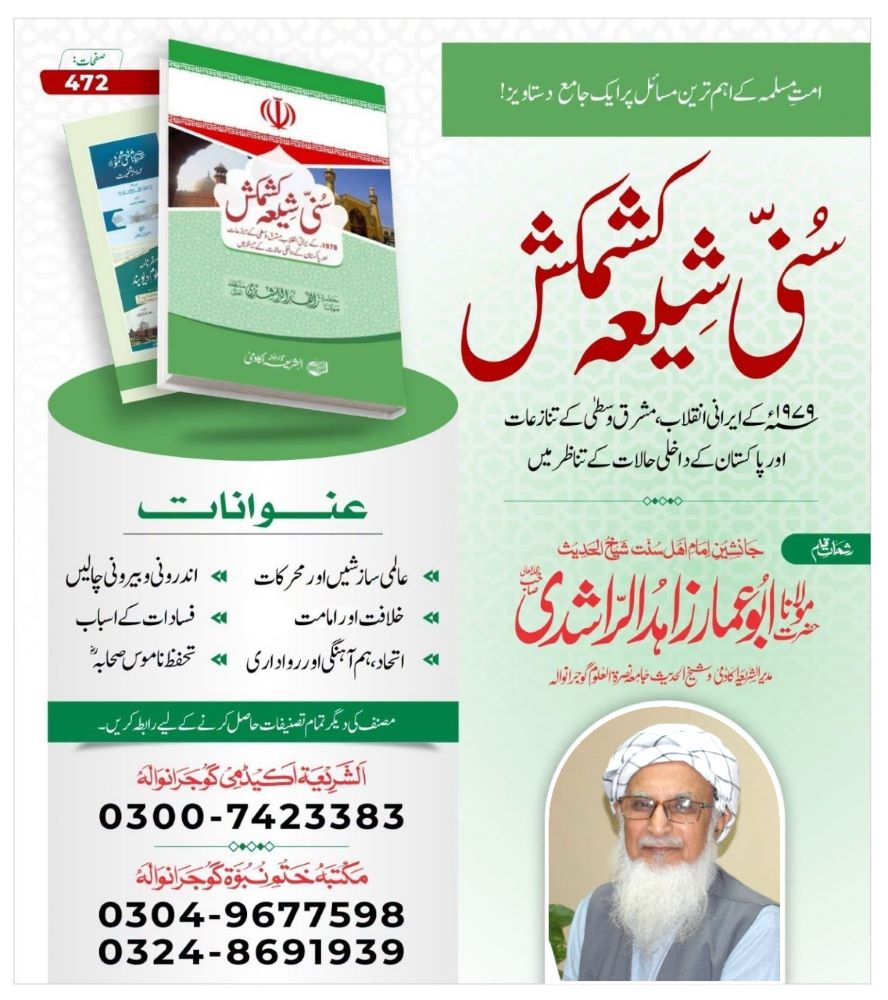
I have had the opportunity over the past half century to visit Iran, Saudi Arabia, Turkey, Egypt, and the United Arab Emirates, and as a journalist, I have also been fulfilling my passion for assessing situations and writing something. In this connection, dozens of my articles and reports have been published in newspapers, which can be viewed on my website zahidrashdi.org, while a collection of them has been published by Al-Sharia Academy Gujranwala in a book of over four hundred and fifty pages titled "Sunni Shia Kashmakash" (Sunni-Shia Conflict), which can be obtained by contacting alsharia.org/contact.
Nevertheless, keeping in view the current situation and future possibilities, I feel like putting forward a few points to the Iranian leadership with utmost sincerity: "Perhaps my words may settle in your heart":
  1. Regarding the ongoing proxy war in the Middle East, the Iranian leadership should clarify that it has no expansionist-style interest in matters outside Iran and that it respects the internal sovereignty and unity of neighbouring countries.
  2. The state borders of Arab countries, especially Saudi Arabia, are respectable in its eyes, and the ambitions being attributed to the Iranian leadership regarding the Haramain Sharifain (the Two Holy Mosques) are not correct.
  3. It is prepared to hold serious talks to create an atmosphere of mutual harmony with the Organisation of Islamic Cooperation (OIC) at the level of the Islamic world and with Arab rulers at the regional level in the war against Israel, and it recognises an atmosphere of mutual trust as a regional necessity.
  4. While Iran's war with America and Israel and the blockade of maritime routes during it have affected the world economy, Pakistan has also not remained safe from its effects, and its fragile national economy is facing further difficulties. In this situation, as a neighbour, whatever room for manoeuvre can be created will certainly be given attention.
We hope that these matters must have been discussed in the meetings between the Pakistani leadership and the Iranian leadership in New York, but for them, some serious progress should also be visible to the public opinion of the Muslim world, especially the Pakistani people, because we too are certainly being affected by the consequences of this conflict, and it is our right to be aware of future possibilities and to be prepared for them.
https://zahidrashdi.org/5909

Translations

(الشریعہ — اکتوبر ۲۰۲۶ء)

الشریعہ — اکتوبر ۲۰۲۶ء

جلد ۳۷ ، شمارہ ۱۰

’’خطباتِ فتحیہ: احکام القرآن اور عصرِ حاضر‘‘ (۱۶)
مولانا ابوعمار زاہد الراشدی
مولانا ڈاکٹر محمد سعید عاطف

علامہ آلوسی کی تفسیر ’’روح المعانی‘‘
مفتی شاد محمد شاد

امتِ مسلمہ کی تعمیر و تشکیل کا نبوی منہج (۳)
مولانا ڈاکٹر محمد ابوبکر فاروقی

کیا قدیم علمِ کلام دورِ حاضر میں ایک  غیر متعلق روایت بن چکا ہے؟ (۱۰)
ڈاکٹر مفتی ذبیح اللہ مجددی

’’اسلام اور ارتقا: الغزالی اور جدید ارتقائی نظریات‘‘ کا جائزہ (۱۸)
ڈاکٹر شعیب احمد ملک
محمد یونس قاسمی

اصحابِ محمدؐ رضوان اللہ علیہم اجمعین کی حیات و خدمات ( ۶)
محمد سراج اسرار

سیاست نامہ از نظام الملک طوسی
ڈاکٹر محمد اکرم ندوی
ڈاکٹر فضل الرحمٰن محمود

استشارہ اور استخارہ: اہمیت، فضیلت اور طریقہ کار
مولانا عبد المتین

جزیرۃ العرب میں غیر مسلموں کی رہائش کی ممانعت کا شرعی و عقلی جائزہ
مفتی سید انور شاہ

اسلام کا سیاسی نظام: ایک قانونی تجزیہ (۱)
ڈاکٹر محمد مشتاق احمد

اسلام اور شخصی آزادی (۲)
ڈاکٹر محمد عمار خان ناصر
ذیشان ہاشم

The Essential Requisite of Protecting the Finality of Prophethood and the Sanctity of the Messenger (PBUH)
Abu Ammar Zahid-ur-Rashdi

مولانا عبید اللہ سندھی سے منسوب ایک مقالے کی تحقیق
مولانا صدیق احمد فاروق

نفاذِ شریعت یا سیکولرزم
حسنین خالد

قائد اعظم اور قانونِ وقف الاولاد
پروفیسر محبوب پوپاتیا

Our Constitutional History & Background of the Proposed 28th Amendment
Mufti Munib ur Rehman

یمن: تابناک ماضی سے مخدوش مستقبل تک
ڈاکٹر محمد غطریف شہباز ندوی

کیا چین مسلم اُمت کا اتحادی بننے جا رہا ہے؟
خالد محمود عباسی

Some Points for the Iranian Leadership`s Consideration
Abu Ammar Zahid-ur-Rashdi

دارالعلوم کراچی میں منعقدہ ایک مبارک تقریب کا احوال
مولانا حافظ خرم شہزاد
تلاش

شماریات