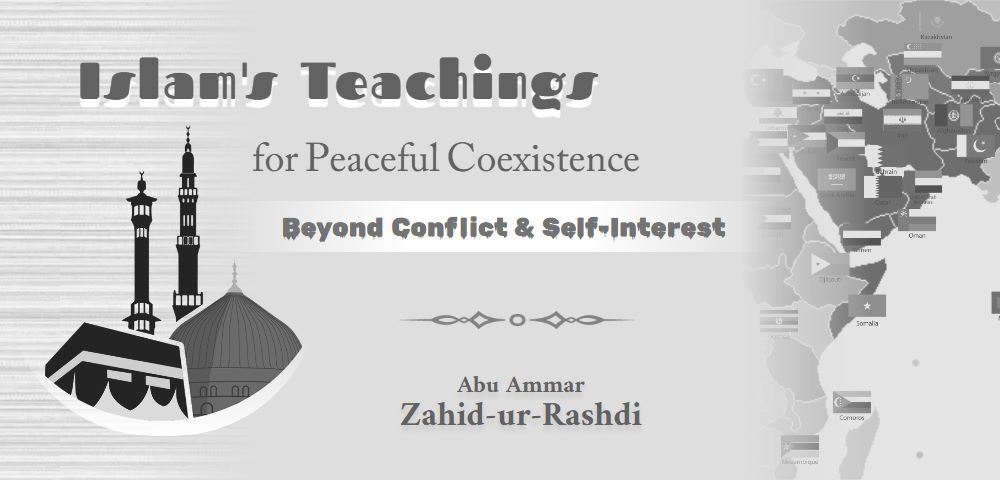


Islam`s Teachings for Peaceful Coexistence
Beyond Conflict and Self-Interest

(Written for the International Conference on the Strategic Capabilities of Islamic Teachings in Achieving Peaceful Coexistence, organized by the Faculty of Theology and Islamic Studies at the University of Tehran on June 26, 2019.)

All praise is for Allah, Lord of all worlds, and blessings and peace be upon the leader of all messengers, his family, his companions, and all those who follow him.
First of all, I want to sincerely thank the Faculty of Theology and Islamic Studies at the University of Tehran and its dean, Sheikh Dr. Mustafa Zulfiqar Talab, for giving me the honor of taking part in this respected gathering of scholars and thinkers. I'm grateful for this chance to learn from the insights of leading Islamic scholars and intellectuals. May Allah reward him greatly and make our coming together here a source of goodness and blessing for human society, the Islamic world, and the Muslim Ummah. Ameen.
Right now, we've come together to think about and discuss a specific question: Which aspects of Islamic teachings should the Muslim Ummah focus on more to build a peaceful and harmonious social life? What strategies, values, and traditions need to be highlighted? And what approach should academic and intellectual circles, especially universities, take to make this happen? When we talk about peaceful coexistence and a society built on security, this isn't just a need for the Muslim Ummah—it's always been a need for all of humanity. As long as people live on this earth, this need will remain. But different nations and different times have had their own philosophies and ways of achieving it. Today, these very differences and the diversity of approaches actually get in the way of creating overall peace and security in human society. It's in this environment that we have to find our own path to peace and security, and figure out ways to escape the current swamp of conflict and instability. This is, of course, part of the natural and religious duty of scholars and intellectuals.
The word "Islam" itself comes from "silm," which means peace and security. It's about being at peace oneself and also creating conditions for others to live in peace. And that's just not possible without setting up some basic principles, rules, and shared ethics and values. Islam shows us the natural way to achieve this: humanity should turn to the One who created us and provides everything we need for life. We need to accept the guidance He sent through His holy prophets, peace be upon them all. Allah pointed this out when He sent Adam and Eve (peace be upon them) down to earth, saying: "When guidance comes to you from Me, then whoever follows My guidance will have no fear, nor will they grieve."
On the other hand, nations, groups, and classes that didn't accept following divine teachings tried to build peace and security using only human reason and desires. They decided that human society knows its own interests best. So, whatever society agrees upon based on its collective thinking and needs—that becomes their path to peace and security. The Quran describes this attitude: "They follow nothing but assumptions and what their own selves desire, even though guidance has come to them from their Lord."
Today, this same intellectual and civilizational struggle continues to involve all of humanity, and its scope keeps getting wider. That's why our primary responsibility is to turn humanity's attention back to Islamic teachings, back to the fact that "guidance has come to them from their Lord." We need to make people aware of this truth: if human society insists on deciding everything for itself, the endless variety of personal desires and conflicting interests among individuals, classes, nations, and countries will never let it reach any real agreement. It will never escape from mutual conflict and struggle. It's essential, therefore, for humanity to turn to a higher Power to sort out its affairs—and that Power is Allah, whose guidance is available to us through the teachings of the prophets, peace be upon them, especially through the teachings of Prophet Muhammad (peace be upon him).
Having stated this basic principle, and to keep things from getting too long, I'd like to put forward a few observations in the form of suggestions for this respected conference to consider. If these points are included in our discussions, I'll feel that I've truly been able to make some contribution to this process.
  • First, it's the responsibility of thinkers, intellectuals, and educational institutions to create awareness about the vast network of international agreements that currently surrounds and affects nations worldwide. I believe major institutions need to expand their research and study to carefully examine these international agreements and their impact—on humanity as a whole and specifically on the Islamic world.
  • Second, where international agreements contain things that aren't fully acceptable to the Muslim community and Muslim countries, it's our responsibility to discuss these matters in international forums and institutions, and to properly communicate the Muslim Ummah's position to them.
  • Third, we need to work on developing a shared code of conduct to keep mutual conflicts and disagreements within the Muslim Ummah and among Muslim countries at a manageable, tolerable level. Serious, collective effort is needed to promote greater unity and solidarity as much as possible.
  • Fourth, it's also part of our responsibility to speak up for Muslims—and for other groups too—who are suffering under the pressure and oppression of global colonialism and tyrannical powers. We need to take steps to reduce this oppression and pressure.
  • Fifth, the Islamic world should raise its voice effectively to help Muslims in Kashmir, Palestine, Jordan, and other oppressed regions gain freedom from cruelty and violence, and to protect their national and religious rights.
  • Sixth, we need to urge international bodies of the Muslim Ummah, especially the OIC (Organization of Islamic Cooperation), to find ways for dialogue and discussion—both among ourselves and with dominant nations and powers—in light of the real-world conditions, problems, and challenges facing the Islamic world.
  • Seventh, universities and religious institutions should make it a priority to highlight and promote the social and communal teachings of Islam as much as possible.
I hope the respected participants of this conference will take the trouble to consider and discuss these points I've raised. May Allah grant success to this conference, reward the organizers greatly, and make our gathering here a source of better guidance and lasting goodness and blessing for the entire Islamic world. Ameen, O Lord of all worlds.

Translations

(الشریعہ — مارچ ۲۰۲۶ء)

الشریعہ — مارچ ۲۰۲۶ء

جلد ۳۷ ، شمارہ ۳

’’خطباتِ فتحیہ: احکام القرآن اور عصرِ حاضر‘‘ (۹)
مولانا ابوعمار زاہد الراشدی
مولانا ڈاکٹر محمد سعید عاطف

سلف صالحین کی تفسیر کے متعلق مباحث (۳)
ڈاکٹر عبد الرحمٰن المشد
عمرانہ بنت نعمت اللہ
سارہ بنت برکات

آثار السنن از حضرت علامہ ظہیر احسن شوق نیموی (۳)
مولانا طلحہ نعمت ندوی

وجودِ باری تعالیٰ: سائنسی تناظر، الحادی فلسفہ اور قرآنی تعلیمات
ڈاکٹر مفتی ذبیح اللہ مجددی

قرآن اور سائنسی حقائق
ڈاکٹر عرفان شہزاد

نمازِ تہجد — تشکر و عبودِیت کی مظہر
مولانا محمد طارق نعمان گڑنگی

روزہ کی اہمیت اور فضیلت قرآن و احادیث کی روشنی میں
مفتی نصیر احمد

زکوٰۃ کے احکام و مسائل اور حساب کا طریقہ
مولانا محمد الیاس گھمن

حرمین شریفین میں وِتر کی نماز امام کی اقتداء میں پڑھنے کا حکم
مفتی سید انور شاہ

قیامِ پاکستان: بنیادِ فکر، راہِ عمل، منزلِ مقصود (۲)
پروفیسر خورشید احمد

ہمارا تعلیمی نظام اور استعماری دور کے اثرات
ڈاکٹر محمد عمار خان ناصر

سپریم کورٹ کا فیصلہ غیر شرعی ہے
ڈاکٹر محمد امین
ملی مجلس شرعی

سپریم کورٹ کا تجربہ، تعلیمی و علمی سفر، آئینی و قانونی مباحث (۴)
ڈاکٹر محمد مشتاق احمد
رفیق اعظم بادشاہ

ذاتی دفاع اور اس کے نتائج
عرفان احمد خان

ٹرمپ کی غزہ مجلسِ امن — کیا عالمی نظام بکھر رہا ہے؟
ڈاکٹر محمد غطریف شہباز ندوی

Islam`s Teachings for Peaceful Coexistence
مولانا ابوعمار زاہد الراشدی

جسٹس خلیل الرحمٰن کا انتقال
ڈاکٹر محمد طفیل ہاشمی
ڈاکٹر محمد مشتاق احمد

آہ! سید سلمان گیلانی
پروفیسر ڈاکٹر جاوید اقبال
مولانا ابوعمار زاہد الراشدی

تمام مکاتبِ فکر کے اتحاد اور مشترکہ اعلامیہ پر تہنیت اور تجاویز
اظہر بختیار خلجی
تنظیمِ اسلامی

مولانا راشدی کے خطابات و بیانات
ادارہ الشریعہ

الشریعہ اکادمی اور معارفِ اسلامیہ اکادمی میں دورہ تفسیر القرآن الکریم
مولانا محمد اسامہ قاسم
مولانا حافظ واجد معاویہ
مولانا محمد رجب علی عثمانی
مطبوعات

شماریات

Flag Counter