

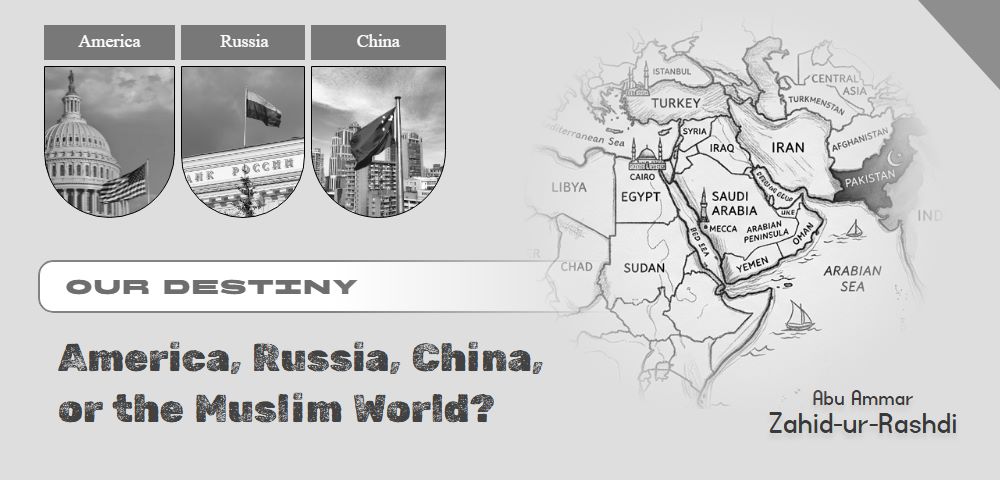
Our Destiny: America, Russia, China, or the Muslim World?

As far as true friendship is concerned, no disbeliever can be a true friend to a Muslim. This is because the ultimate aim of Islam is to eradicate disbelief and oppression from the world and establish a divine system of justice and fairness. Regardless of its form, disbelief is fundamentally opposed to Islam. Therefore, if the true purpose behind the creation of Pakistan was indeed to implement and enforce Islamic justice, then any disbelieving power would be utterly foolish to claim sincere friendship with Pakistan.
This is precisely why Allah Almighty has forbidden believers from forming deep and unconditional alliances (موالات) with disbelievers in the Quran. The Holy Prophet (peace be upon him) declared that "الکفر ملۃ واحدۃ" – meaning, all disbelievers are united as one community when it comes to opposing Islam. However, cooperation based on mutual interests is possible with any disbelieving nation. The Prophet himself entered into treaties with the polytheists of Makkah, the Jews of Madinah, and other tribes, and he fulfilled those agreements faithfully.
On this basis, we must consider:
  1. Among these three powers, with which country do we share the greatest convergence of interests?
  2. What has been the outcome of past friendships and treaties with these nations, both for us and for other Muslim countries?
  3. Which of these nations is relatively more likely to demonstrate loyalty and reliability?
Not long ago, we relied on America and its bloc to counter Indian aggression on military and diplomatic fronts, and to secure a just resolution of the Kashmir issue. But experience shows that this American friendship failed the test of loyalty on both military and diplomatic fronts. The result is clear: despite military alliances with the US, Pakistan was dismembered, and the Kashmir issue remains unresolved to this day.
On the other hand, to please America, we antagonized Russia from the very beginning. The consequence of this ill will was the creation of Bangladesh. However, even if we had not angered Russia and had instead pursued friendship and agreements with them, given how Russia treated the Arabs, we likely would not have gained much benefit either.
The core issue is that we – and many other nations – made a fundamental mistake by aligning ourselves with two superpowers. The interests of major powers are vast, while ours are limited. Where a clash occurs between the interests of a superpower and its smaller ally, the superpower will naturally not abandon its own interests. The disloyalty of America towards Pakistan and Turkey, and Russia's neglect towards the Arabs, are rooted in this very reality.
Now, what are our interests? We need military and diplomatic assistance against our rivals – India, Greece, and Israel – and we need financial and technical cooperation for development projects at home. In contrast, the interests of major powers are far broader. Logically, unless both sides share interests at the same level, equal friendship becomes difficult, and often impossible. Therefore, neither we nor any other Muslim country should expect sincere friendship from either the US or Russia.
As for China, the question is somewhat different. China has its own interests tied to us, which it cannot easily abandon. For instance, the entire Islamic world shares an interest with China in organizing the Third World, free from the dominance and influence of the two superpowers. Furthermore, curbing growing Russian and Indian aggression in the subcontinent is a shared interest for both China and Pakistan. Thus, China's friendship may prove more durable for us than others. However, based on past experiences, we must remember that placing absolute trust in any power is never beneficial for us – especially China. China cannot fill the void left by America and Russia in the Third World. Its own development and strength might suffice for itself, but practically, it may not be as effective for others.
So, instead of relying on others, why not adopt the path of organizing the Islamic world ourselves and pooling its resources? What resources are we lacking? If we dedicate our resources toward military and industrial development, would we still need the support of any superpower?
The true path to honor, dignity, progress, and greatness for us is to abandon the practice of relying on major powers altogether, consolidate our own resources, organize the Islamic world, and while benefiting from China's technical strength, set our ultimate destination as making the Muslim Ummah itself a leading force among superpowers. May Allah Almighty grant us the ability to think and decide rightly.
https://zahidrashdi.org/5788

(الشریعہ — مئی ۲۰۲۶ء)

الشریعہ — مئی ۲۰۲۶ء

جلد ۳۷ ، شمارہ ۵

’’خطباتِ فتحیہ: احکام القرآن اور عصرِ حاضر‘‘ (۱۱)
مولانا ابوعمار زاہد الراشدی
مولانا ڈاکٹر محمد سعید عاطف

’’علم مشکلات القرآن کا تاریخی ارتقاء‘‘ (۲)
مولانا ڈاکٹر سمیع اللہ سعدی

سلف صالحین کی تفسیر کے متعلق مباحث (۵)
ڈاکٹر عبد الرحمٰن المشد
عمرانہ بنت نعمت اللہ
سارہ بنت برکات

حدیث میں بیان کی گئی علاماتِ قیامت کی تاریخی واقعات سے ہم آہنگی (۶)
ڈاکٹر محمد سعد سلیم

فقہِ اسلامی کا تعارف و تاریخ
ڈاکٹر محمد فہیم اختر ندوی

حنفی اصولی منہج (۱)
ڈاکٹر محمد مشتاق احمد

ائمہ اہل بیت کے فقہی اجتہادات اور فقہ جعفری
ڈاکٹر محمد عمار خان ناصر

’’کیا خدا کا وجود ہے؟‘‘ (۲)
ڈاکٹر مفتی یاسر ندیم الواجدی
عمار خان یاسر

کیا قدیم علمِ کلام دورِ حاضر میں ایک  غیر متعلق روایت بن چکا ہے؟ (۵)
ڈاکٹر مفتی ذبیح اللہ مجددی

’’اسلام اور ارتقا: الغزالی اور جدید ارتقائی نظریات کا جائزہ‘‘ (۱۴)
ڈاکٹر شعیب احمد ملک
محمد یونس قاسمی

عمرِ اولؓ اور عمرِ ثانیؒ کا طرزِ حکومت
علامہ رضا ثاقب مصطفائی

اصحابِ محمدؐ رضوان اللہ علیہم اجمعین کی حیات و خدمات (۲)
محمد سراج اسرار

قیامِ پاکستان: فکری بنیاد، راہِ عمل، منزلِ مقصود (۴)
پروفیسر خورشید احمد

نظریۂ اسلام، نظریۂ پاکستان، دو قومی نظریہ
ڈاکٹر سعید احمد سعیدی

مسجد الاقصیٰ اور امتِ مسلمہ
مولانا محمد طارق نعمان گڑنگی

القدس کی صورتحال پر اسلامی تعاون تنظیم (OIC) کے نام خط
سنیٹر مشتاق احمد خان

ایران پر چالیس روزہ امریکی اسرائیلی جارحیت اور پندرہ روزہ جنگ بندی
ڈاکٹر محمد غطریف شہباز ندوی

Our Destiny: America, Russia, China, or the Muslim World?
مولانا ابوعمار زاہد الراشدی

سید محمد نقیب العطاس کی وفات: اسلامی فکر کے ایک عہد کا خاتمہ
ڈاکٹر محمد غطریف شہباز ندوی

حاجی عثمان عمر ہاشمیؒ کا سانحہ ارتحال
ڈاکٹر محمد عمار خان ناصر
مولانا محمد اسامہ قاسم

مطبوعات

شماریات

Flag Counter